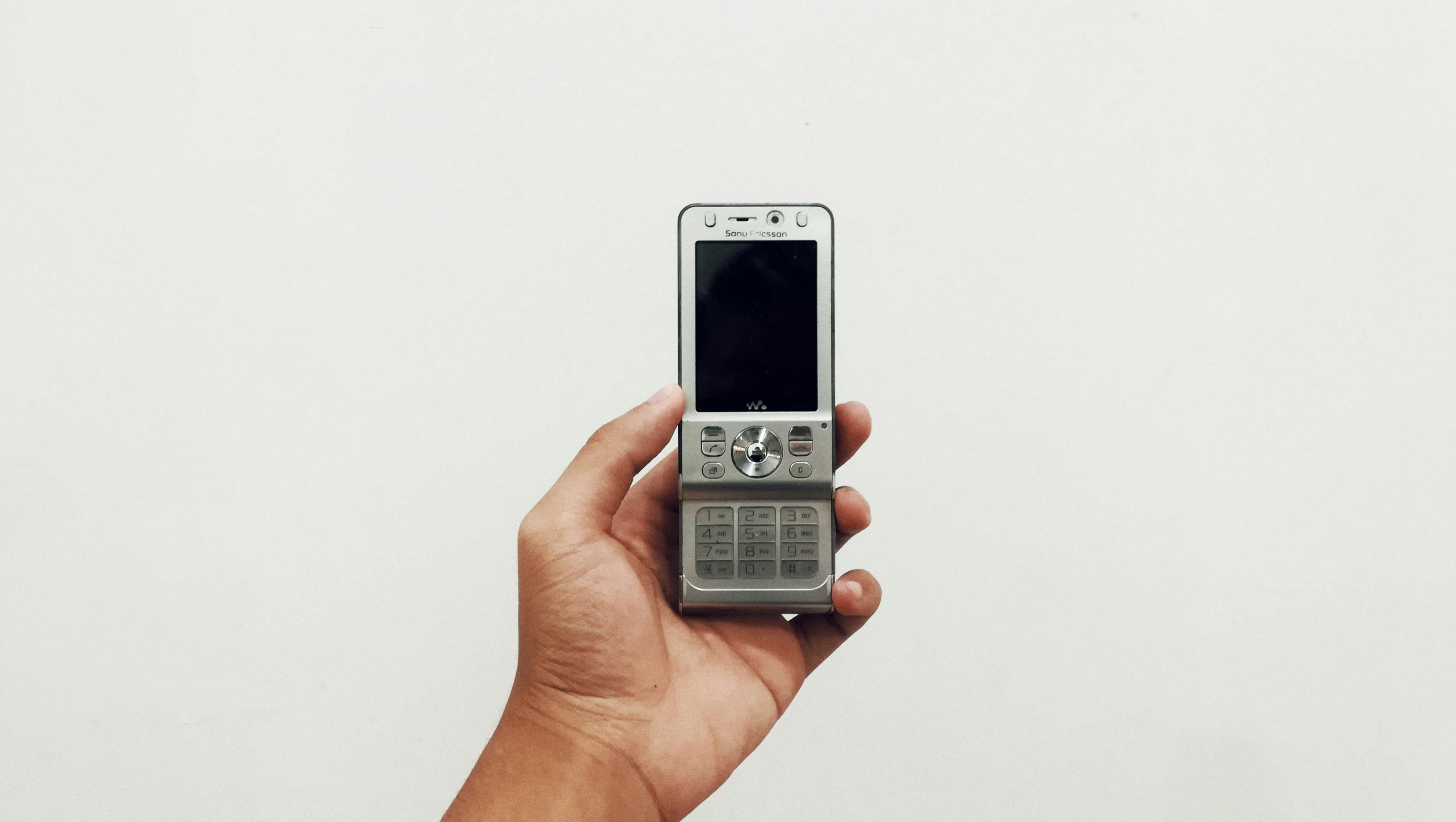
I kept my slick, all-knowing smartphone hidden like a digital secret in a dusty corner of my desk for thirty days. It was replaced by a heavy, distinctly outdated flip phone, which became my only means of communication. My experiment was not motivated by Luddite dogma, but rather by a growing sense of unease and a nagging suspicion that the very thing that was supposed to connect me was actually cutting me off from myself. Something inside of me was aroused when I read about Nathan Covey’s widely shared experiment & his triumphant reports of enhanced focus and memory.
Could I, too, relive a little bit of that calm before smartphones? This was a purposeful, thoughtful vacation rather than a long-term abandonment. A “30-Day Flip Phone Challenge” for my own attention span, which is becoming more & more fragmented.
An enduring friend turned despot. Prior to this challenge, my smartphone was an extension of who I am. Its bright screen instantly filled every moment of potential silence, every fleeting thought, and every ordinary curiosity. I was consumed by an almost pathological fear of missing out as I browsed through countless feeds. Once a strong oak, my attention span had become a fragile sapling, constantly battered by cyber winds.
A phantom vibration was a constant whisper in my ear as I caught myself mid-conversation, my eyes darting to my pocket. I was aware that this was unhealthy. When I looked at myself—or rather, the version of myself glued to that tiny screen—the bothersome feeling got worse. My focus was disorganized & my memory became hazy.
Clarity and a return to a more centered self were things I longed for. The “Dumb Phone” Is Alluring. I was captivated by the growing “dumbphone” trend, especially among Gen Z & Millennials. With more than 185,000 weekly visitors, Reddit’s r/dumbphones community provided a convincing example of how a digital detox could be beneficial.
| Phone Usage | Metrics |
|---|---|
| Flip Phone Calls | 30 days |
| Smartphone Usage | None |
These people actively tried to recover their time and focus from the digital maze rather than being tech-averse. They talked about rekindled interests, more in-depth discussions, and an overall feeling of peace. With all the distracting bells and whistles removed, the idea of using a flip phone exclusively for calls and texts emerged as a workable solution and a route to digital liberation. Reestablishing technology’s true purpose in my life was more important than completely rejecting it.
The desire to scroll and phantom vibrations. To put it mildly, the first few days were quite startling. My brain continued to detect phantom vibrations, but my pockets felt strangely lighter. My thumb would twitch as I instinctively reached for my nonexistent smartphone, searching for the muscle memory of the never-ending scroll.
Unquestionably, it was a digital phantom limb that demonstrated the extent of my addiction. The sudden silence was overwhelming because social media, news alerts, and email notifications had been the constant buzz of my life. I was afraid of missing out on something, and I experienced an odd sense of loss. Anything. It was a very real, very physical emptiness, like a smoker’s desire for a cigarette. Discovering My Environment Again.
But in the midst of the initial discomfort, a slight change started. I noticed that I was staring out the window during my morning commute rather than staring at a screen. I became aware of the subtle changes in the cityscape that I had been ignoring for years, as well as the architecture of well-known buildings & the play of light on the trees.
The world was gradually taking center stage in my digital life, where it had previously been a background. On the train, I overheard brief excerpts of conversations; I was merely listening & observing, not necessarily participating in them. It was like getting back a feeling I hadn’t known I had lost. The muscles of memory contract. The University of Alberta & Georgetown University studies became more than just fascinating statistics as the second week went on; they became my actual experiences.
A digital detox’s scientific support began to show itself in concrete ways. I could clearly see that my memory had improved. Small things like remembering specifics from conversations or directions without a GPS. Instead of mindlessly following a blue .
on a screen, I discovered that I had to rely on street signs and mental mapping to navigate public transport. It was a minor triumph of my intellect over algorithmic guidance, and it was satisfying. My focus also became more acute. My full attention was now focused on tasks that used to feel disjointed and interrupted by digital pings. I was able to read an article through to the end without having to check my phone, which helped my ideas come together & become more profound.
Unusual Engagement & the “Boredom Detox”. The “boredom detox” was popular during this time. I had to face boredom head-on without the instant gratification of my smartphone. And I unexpectedly found happiness in that confrontation. I began keeping a tiny notebook & pen with me, recording thoughts, observations, and even random ideas.
While I was waiting, I noticed that I was drawing—a long-forgotten pastime that was suddenly resurfacing from the recesses of my memory. I indulged in more sensory experiences, genuinely appreciating the texture of a book in my hands, the aroma of rain, and the taste of my coffee in the morning. Because I wasn’t always looking for a digital substitute, the world became richer and more colorful. In-depth Discussions and Current Situations. The most significant changes started to take effect by the third week.
My conversations with people, which were previously interspersed with covert phone checks, became more real and present. I kept my phone in my pocket, a silent, passive observer, rather than setting it on the table when I went out to coffee with friends. This seemingly insignificant deed made a big difference. Conversations were more engaging, less interrupted, and flowed more freely.
I discovered that I was actually connecting & listening. The subtleties of body language, the shared laughter, and the peaceful comfort of just being together without digital interference were just as important as the words being spoken. The Pleasure of Continuous Innovation. My artistic endeavors, which had undoubtedly suffered under the oppression of continual digital distraction, saw a comeback. I found myself having longer, uninterrupted periods of time when my smartphone wasn’t there to pull me in.
Writing, playing the guitar, or just coming up with new ideas were all made possible by the digital void. That persistent undercurrent of unease, the fear of missing digital updates, had mostly subsided. I no longer felt the burden of constant digital attention. The Intentional Return.
I felt conflicted about getting my smartphone back as the 30 days came to an end. I no longer felt the desperate, compulsive pull, even though I missed some conveniences like instant messaging friends who lived far away, having quick access to maps, & being able to capture significant moments with a good camera. The “30-day flip phone challenge” had succeeded in breaking my addictive patterns and reestablishing my connection to the world and myself. I used my smartphone again with much more awareness, and I still do.
I’ve put in place stringent digital boundaries, such as prohibiting phones in bedrooms, setting aside specific “phone-free” times, and keeping a much closer eye on app usage. adopting the “Dumbphone” philosophy. As a constant reminder of the important lessons I learned during my detox, I still keep my flip phone with me for calls & necessary texts. This decision is further supported by the recent release of 4G flip phones, such as the Orbic Journey & Nokia 2780. They are the ideal addition to a more deliberate digital life since they provide basic connectivity without the alluring distractions.
I still use my smartphone for certain purposes, such as GPS when absolutely necessary, streaming music while working out, and taking excellent pictures, but it’s no longer my primary mode of operation. It’s not a master; it’s a tool. A Durable Change. This month-long experiment was a significant change rather than merely a novelty. I came out of it with a sharper mind, a more robust memory, and a fresh respect for the analog world. My anxiety has considerably decreased, my conversations are more in-depth, and my focus has greatly improved.
The joy of being present has taken the place of the fear of missing out. A quieter, more contemplative life has replaced the constant need for digital stimulation. Those thirty days are not something I would exchange for anything. They demonstrated that sometimes less really is more and were an essential, transformative reset. My relationship with technology has completely changed, and I am definitely a better person as a result.
.
Leave a Reply