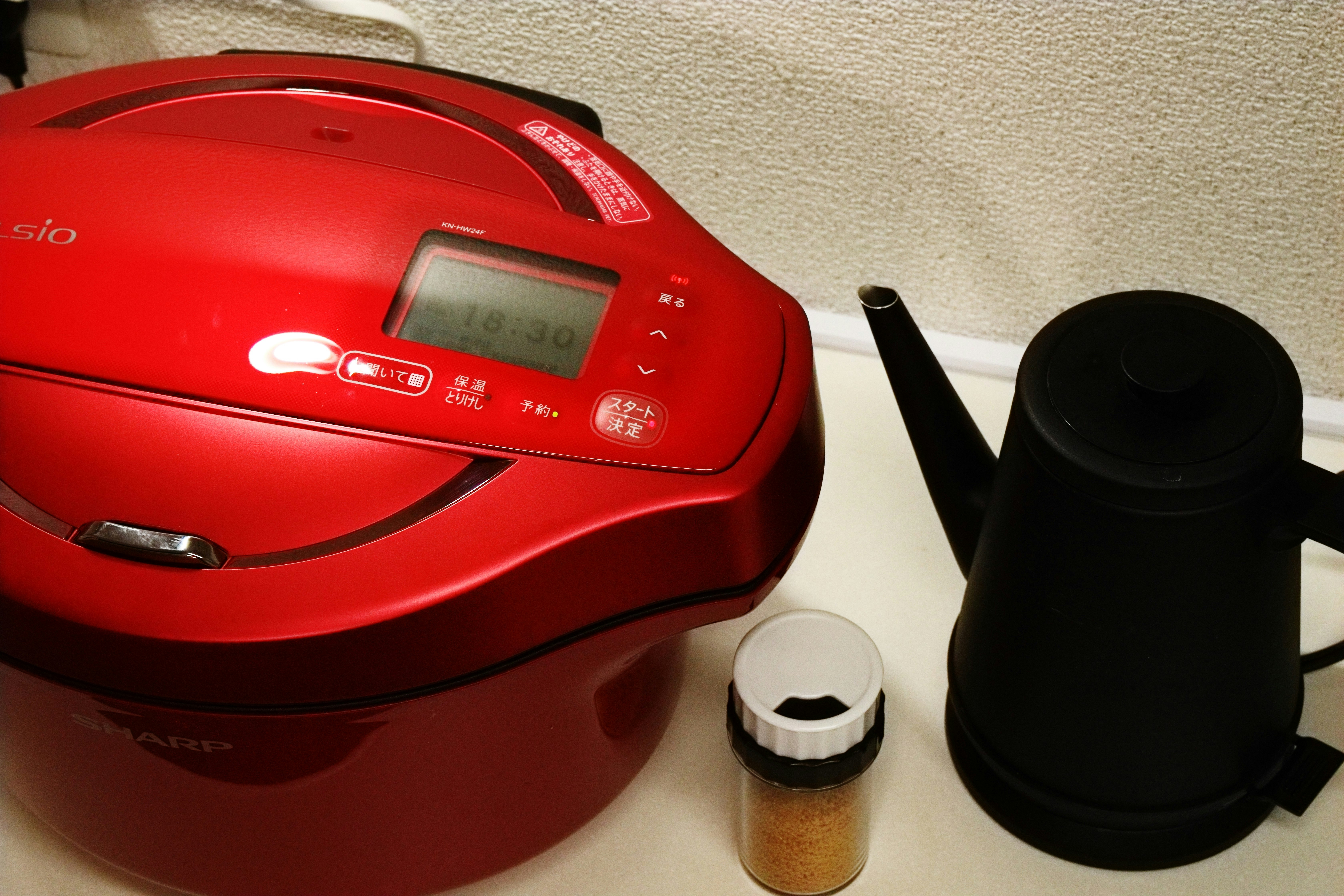
In the quiet hum of my kitchen, the idea began as a casual thought, a wave of curiosity. For years, my trusty rice cooker had been my go-to for perfectly fluffy jasmine and basmati rice. It was a predictable, almost mundane appliance, rarely straying from its primary duty. But then, the internet, with its endless stream of challenges & experiments, planted a seed.
I came upon a well-known YouTube video about a personal challenge in which a person cooked rice every day for a month. It wasn’t a scientific study or about all starches, but it got me thinking: what if I challenged myself to use my rice cooker for every starch I ate for a whole month instead of just rice? It felt like a culinary challenge, a test of my flexibility and the usefulness of a gadget I had mostly undervalued. The promise was made: 30 days, every starch, using only the rice cooker. Would it be a disaster of gummy proportions? Would I uncover the hidden talents of my humble cooker?
Equipped with my appliance & a healthy dose of optimistic skepticism, I was prepared to get started. I knew I needed to make some preparations before I even turned on my rice cooker with a glimmer of starch-filled anticipation. This involved more than just tossing things into a pot; it involved recognizing potential hazards and increasing the likelihood of success. The concept of “every starch” made me think of pasta, potatoes, grains, and even items I hadn’t previously thought might be included.
It was time for some strategic pantry stocking, a lot of mental preparation, and a little research. The Starch Pantry is being stocked. I needed to make sure I had a range of starches to test for this challenge, even though my regular pantry already had a respectable mix. Of course, rice was a must, but I also considered quinoa, couscous, and even oats.
Then there were the root vegetables: potatoes were a clear choice, but what about sweet potatoes? Could I also try pasta? I chose to buy small amounts of each to prevent waste because some experiments might not work out as well as others. Grains Abound: I made sure there was plenty of quinoa, brown rice, white rice, and steel-cut oats.
| Day | Rice Cooker Usage |
|---|---|
| 1 | Rice |
| 2 | Quinoa |
| 3 | Couscous |
| 4 | Barley |
| 5 | Bulgur |
| 6 | Polenta |
| 7 | Wild Rice |
| 8 | Basmati Rice |
| 9 | Brown Rice |
| 10 | Arborio Rice |
| 11 | Millet |
| 12 | White Rice |
| 13 | Farro |
| 14 | Jasmine Rice |
| 15 | Black Rice |
| 16 | Red Rice |
| 17 | Sushi Rice |
| 18 | Sticky Rice |
| 19 | White Quinoa |
| 20 | Red Quinoa |
| 21 | Black Quinoa |
| 22 | Tri-Color Quinoa |
| 23 | Israeli Couscous |
| 24 | Whole Wheat Couscous |
| 25 | Pearl Couscous |
| 26 | Maftoul Couscous |
| 27 | Curry Couscous |
| 28 | Herbed Couscous |
| 29 | Lemon Couscous |
| 30 | Garlic Couscous |
I also picked up some instant couscous because I was aware that its rapid cooking could pose a different set of difficulties. Root Vegetable Rumble: Yukon Golds and Russet potatoes were crucial. Curious about how the cooker would react to the sweet potatoes’ moisture content, I also picked up a couple of them. The one that worried me the most was the pasta predicament.
I prepared myself for possible clumping or mushiness by purchasing a bag of macaroni and a small box of spaghetti. Beyond the Fundamentals: In order to have alternatives in case the initial starch experiments became overly predictable, I even thought about polenta and barley. Recognizing the Rice Cooker’s Potential and Limitations. The model of rice cooker I have is rather common. It features a steam feature, a keep-warm setting, and several presets for various kinds of rice.
Some of the more recent “carb-reducing” or “low-carb” models that are gaining popularity have more sophisticated features than this one. This posed an instant problem. I was aware that specially made “carb-reducing” cookers frequently use techniques like using superheated steam or boiling rice in extra water to dissolve and drain starch.
There would be no such built-in mechanisms in my modest appliance. The Starch-Reduction Question: I was well aware that my rice cooker would not produce low-carb starches by magic. The objective was to use the rice cooker to cook all starches rather than cut back on carbohydrates. Although fascinating, the information I had learned about “carb-reducing” rice cookers—such as those that use extra water to drain starch and reduce digestible carbohydrates by 20–50%—and the Osaka Metropolitan University’s research on superheated steam creating a porous structure for softer, more lustrous rice did not directly apply to my basic model. Cooking capacity, not starch manipulation, was the focus of my experiment. Water Ratios: The water-to-starch ratio is the most important component of any rice cooker.
I was aware of the general rules regarding rice. It would be a matter of educated guesswork for other starches, beginning with suggested cooking guidelines for stovetop techniques and making adjustments. Steaming Capabilities: An unanticipated benefit was the steam feature. I thought of using it for steaming dumplings or other dough-based foods, or for vegetables that are frequently cooked with starches.
Recording the Experience: For Science (and Sanity). I made the decision to maintain a thorough journal in order to make this challenge genuinely worthwhile and to monitor my advancement (as well as my unavoidable setbacks). This covered what I cooked, how much water I used, how long I cooked it, and—most importantly—taste & texture evaluations. As the month went on, I would be able to learn from it, adjust, and maybe even spot trends in what worked & what didn’t. The “Starch Log” would record the starch, the rice cooker’s cooking technique, the result, and any notes for each day. Sensory Analysis: “Mushy,” “al dente,” “gluey,” and “perfectly cooked” were the adjectives I expected to use.
Photo Evidence: As they say, a photograph is worth a thousand words, particularly when recording the successes or failures of experimental cooking. The first week was like a warm-up, a slow introduction to the waters of starch. Using my rice cooker, which I was most familiar with, I began with the familiar terrain of rice before carefully exploring other grains.
It was about gaining self-assurance and comprehending how the cooker works with various ingredients. Day 1–3: Glorious Rice. The first few days, of course, were devoted to the purpose of my rice cooker.
I experimented with the “white rice” & “brown rice” settings and adjusted water ratios as I investigated various varieties of rice. White Rice Perfection: I was able to get the texture of fluffy, distinct grains that I had always cherished. As anticipated, the cooker handled it with ease. Brown Rice Breakthrough: Although brown rice is known to be more difficult, it turned out wonderfully here as well. It was tender without being undercooked thanks to the cooker’s steady heating.
A longer, lower-heat cooking cycle—which is essential for whole grains—seemed to be possible with the “brown rice” setting. Day 4-7: Exploring Grain. After mastering rice, I focused on other grains. Things became interesting at this point, necessitating a little more improvisation. My next goals were couscous & quinoa.
Quinoa Quality Control: Since quinoa is frequently prepared similarly to rice, I approached it with some assurance. My quinoa to water ratio was 1:2, and the outcome was fantastic—fluffy, distinct grains without any bitterness. It was perfect to have the rice cooker simmer gently. Couscous Conundrum: Boiling water is typically used to prepare instant couscous.
Could the rice cooker handle it, I wondered? After the water in the cooker had just reached a boil, I tried adding the couscous and leaving it. It felt a bit like taking advantage of the rice cooker’s capabilities, but it worked. It did, however, produce couscous that was evenly hydrated, preventing the clumping I occasionally encountered with the stovetop method. I also learned a valuable lesson: if I simply added water and dry couscous and let the cooker run, it turned into a sticky, unappealing mess.
I tackled the more difficult starch categories—root vegetables & the great pasta unknown—in the second week. This is where I anticipated the biggest learning curves. Day 8–11: Beyond Potatoes. A steaming environment seemed to be a perfect fit for potatoes. I was interested in how they would perform.
Steamed Potatoes: For this, I used the steam feature. Over boiling water, I put quartered Yukon Golds in the steaming basket. The potatoes were tender, fluffy, and cooked through beautifully. This was an obvious victory.
I discovered that the steam feature is similar to a very successful steaming technique for root vegetables. Sweet Potato Surprise: Due to their higher moisture content, sweet potatoes were a little more difficult. I experimented with both steaming & cooking them in water.
While direct cooking produced a very soft, almost purée-like texture that may not be to everyone’s taste, steaming produced a slightly firmer, more distinct texture. I came to the conclusion that it was crucial to carefully regulate the cooking time for sweet potatoes in order to prevent them from becoming mushy. The Pasta Gauntlet on days 12–14.
For me, pasta was the ultimate starch challenge. It’s widely believed that for pasta to cook through and avoid sticking, it needs to boil vigorously. Could it be handled by a rice cooker, which is meant for gentler cooking? The Spaghetti Struggle: Making spaghetti for the first time was…
instructive. I made pasta and water according to a standard stovetop ratio. A tangled, starchy mass was the end result. The strands fused into a single, gelatinous entity because the cooker’s gentle simmer was insufficient to keep them apart.
This was obviously a failure. I realized that the main offenders were the inadequate boiling and the absence of churning. Macaroni Metamorphosis: Shorter & frequently cooked in sauces, macaroni seemed a little more promising. In an attempt to replicate a more fluid cooking environment, I cooked it with more water than usual.
Although it had fewer fused pieces than the spaghetti, it was still a little softer and more evenly cooked than I would have liked for a traditional al dente. It wasn’t perfect, but it wasn’t unpalatable either. Although my simple model couldn’t duplicate that mechanism, I pointed out that “carb-reducing” cookers, which use extra water to drain starch, might have a small advantage in this situation.
I was starting to establish a rhythm by the third week. After going through both successes & failures, I was able to comprehend the subtleties of my rice cooker’s capabilities. I began investigating less popular starches and troubleshooting areas where I had encountered difficulties. Grits and Grains, Days 15–18.
I wanted to use grains to push the envelope even farther. New challenges were presented by polenta and oats. Oatmeal Odyssey: Since steel-cut oats are a slow-cooked grain, I thought my rice cooker would work well with them. I made a pot of steel-cut oats that was perfectly cooked and creamy by using a higher liquid ratio. I could always have warm oatmeal on hand thanks to the “keep warm” feature after cooking.
This proved to be yet another victory. Polenta Precision: Similar to couscous, polenta needs to be properly hydrated. I discovered that the best results came from adding the cornmeal to the water after it had heated up and using the “porridge” or “quick cook” setting (if my cooker had one for smaller batches). It made the polenta smooth and creamy & avoided scorching. Day 19–21: Pasta and Refinements are revisited.
Pasta continued to be a contentious issue. Even though I couldn’t drain it, I chose to try a different strategy motivated by the notion of starch reduction through water. In order to achieve a “soupy” beginning, I greatly increased the water volume in the “Pasta Water” experiment. In an effort to avoid sticking, I also added a tablespoon of oil to the water. This was only passably successful. Although it wasn’t as bad as my first attempt, the spaghetti still clumped a little.
Better-performing macaroni had more distinct pieces. Even though the texture was softer and the cooking time was longer, it was still a feasible option. I was beginning to understand that for certain starches, the rice cooker is more of a slow-cooker substitute than a traditional boiling pot. The last week was spent reinforcing what I had learned, going over any unanswered questions, and getting ready to come out of my cocoon caused by starch.
In light of the knowledge I had acquired regarding specialized rice cookers, I also began to consider the wider ramifications of my experiment. Embracing Versatility, Days 22–25. With my newfound knowledge, I revisited some of my previous successes & investigated some less popular starches.
Barley Bonanza: Using the brown rice setting, I prepared pearl barley. As anticipated, it took longer, but the finished barley was perfectly tender and perfect for soups or as a side dish. The rice cooker’s steady heat was ideal for this slower-cooking grain. Rice Pudding Revelry: I even succeeded in cooking rice with milk & sugar to create a basic rice pudding.
The “keep warm” feature was ideal for maintaining the proper temperature, and the cooker’s gentle simmer avoided scorching. The “Carb-Reducing” Context, Days 26–28. As the challenge drew to a close, I couldn’t help but think about what I had read about specialized “carb-reducing” rice cookers. Understanding the Mechanism: I considered how my experiment differs from “carb-reducing” cookers, which use techniques like superheated steam or excess water to dissolve and drain starch to achieve a 20–50% reduction in digestible carbohydrates.
Despite its versatility, my basic rice cooker lacks these particular starch-reduction features. In contrast to my challenge that was solely focused on cooking, the clinical data demonstrating a significantly lower postprandial glucose response with “low-carb” rice was fascinating. The Consumer Caution: I also thought of the consumer alert regarding exaggerated claims about starch reduction.
It helped me understand that basic cooking principles and reasonable expectations are still essential, even though technology can help. Even though my experiments didn’t reduce carbohydrates, they did show how different starch-based foods can be prepared. The Kashmir University patent for a “Starch Rice Cooker” and Panasonic’s SR-HL151KST with its steam basket also showed the ongoing innovation in this space, focusing on health benefits, which my simple endeavor hadn’t directly addressed. Day 29–30: introspection and reassessment. The last two days were more spent appreciating the results of my work and reflecting on what I had discovered. The Starch Re-resistant Hypothesis: I took into consideration the independent research indicating that, regardless of the cooker, chilling cooked rice for a full day can transform starch into resistant starch.
This was an intriguing point, a different perspective on starch and health that wasn’t covered by my experiment, which concentrated on cooking techniques. The Verdict on Versatility: It turned out that my rice cooker was much more capable than I had thought. It was a great multipurpose tool for making a variety of starches, but it wasn’t a low-carb cooking miracle. I used my rice cooker for thirty days to cook every starch.
What I discovered was far more than I had expected. My rice cooker became a multipurpose kitchen workhorse after evolving from a one-trick pony. I found that many starches can be effectively prepared in a rice cooker with careful attention to water ratios, cooking times, and a willingness to try new things. The hardest part was still pasta, which needed a lot of tweaks and still didn’t produce the ideal al dente texture I’m used to. Nonetheless, the rice cooker provided a practical, reliable, and frequently better cooking experience for grains, oats, and even some root vegetables. Although that information provided a useful context, this challenge was not about endorsing particular “carb-reducing” technologies or claiming scientific breakthroughs.
It was about personal culinary exploration & stretching the limits of a common appliance. I discovered that there are advantages to innovation, such as the starch-evacuating systems found in more sophisticated cookers or the straightforward process of chilling rice to produce resistant starch. However, a month of cooking only with starches showed me the intrinsic adaptability of my current appliance and the satisfaction of a culinary challenge accomplished. Although it still produces a flawless bowl of rice, my rice cooker can do so much more now.
.
Leave a Reply