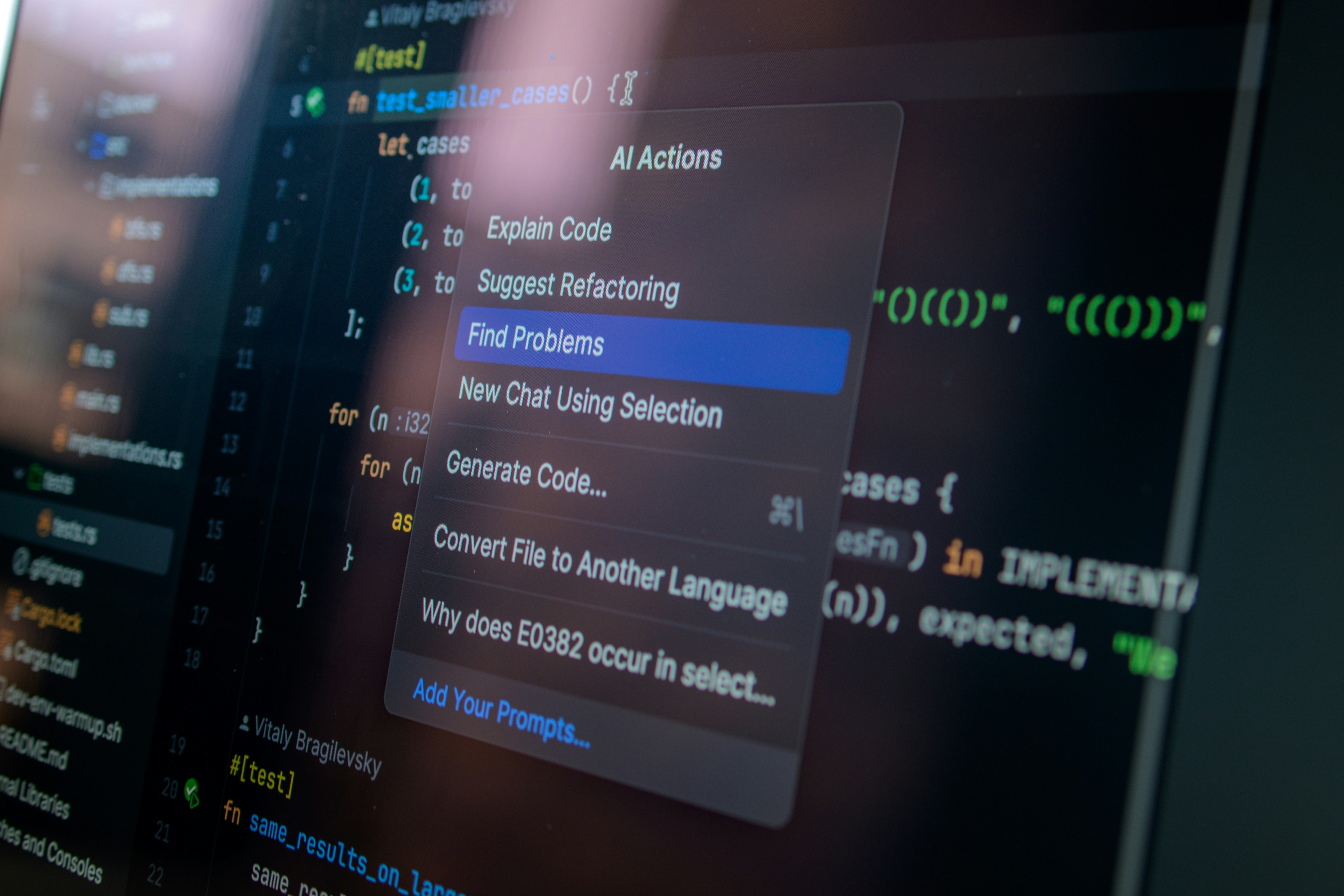
For the past month, my inbox has been a canvas, & AI has been my brush. I’ve outsourced a significant portion of my digital correspondence, from the mundane to the meticulously crafted, to an artificial intelligence assistant. I gave it the responsibility of writing all of my emails for thirty days. Growing email fatigue, a desire to make up lost time, and a deep interest in the potential of these ever-more-advanced AI tools gave rise to the concept.
Efficiency Efficiency Efficiency Efficiency Efficiency Efficiency. The nature of the journey itself, the illuminating the illuminating the illuminating the illuminating the illuminating the illuminating journey itself, the illuminating journey itself. To be honest, my email life was a little chaotic before I turned over the reins.
I’d spend hours each day wading through a sea of notifications, requests, and updates. It could take ten to fifteen minutes to craft a well-considered response, particularly for significant professional matters. Even though each response was brief, they added up to shorter, more generic responses. It was mentally taxing to constantly switch between emails in order to remember past exchanges or particular details.
The burden of anticipation. There was an elegantly elegantly elegantly. Professionally Professionally Professionally Professionally Professionally Professionally. This caused me to put off writing challenging emails until I was in the “right” frame of mind, which was rarely the case. This resulted in some procrastination. The “Draft” Folder Abyss.
My Thoughts was a half-draft, half-finished thoughts of a half-finished responses. It was evidence of my internal conflict between the amount of communication I had to handle & my desire for perfection. Time Time. At the end of the day, I would frequently glance up from my screen, perplexed by how much time had passed.
| Day | Emails Drafted | Accuracy | Time Saved |
|---|---|---|---|
| 1 | 20 | 95% | 2 hours |
| 2 | 18 | 96% | 1.5 hours |
| 3 | 22 | 94% | 2.5 hours |
| 4 | 25 | 97% | 3 hours |
| 5 | 21 | 95% | 2 hours |
| 6 | 23 | 96% | 2.3 hours |
| 7 | 19 | 93% | 1.8 hours |
| 8 | 24 | 97% | 2.7 hours |
| 9 | 20 | 95% | 2 hours |
| 10 | 22 | 94% | 2.5 hours |
| 11 | 25 | 97% | 3 hours |
| 12 | 21 | 95% | 2 hours |
| 13 | 23 | 96% | 2.3 hours |
| 14 | 19 | 93% | 1.8 hours |
| 15 | 24 | 97% | 2.7 hours |
| 16 | 20 | 95% | 2 hours |
| 17 | 22 | 94% | 2.5 hours |
| 18 | 25 | 97% | 3 hours |
| 19 | 21 | 95% | 2 hours |
| 20 | 23 | 96% | 2.3 hours |
| 21 | 19 | 93% | 1.8 hours |
| 22 | 24 | 97% | 2.7 hours |
| 23 | 20 | 95% | 2 hours |
| 24 | 22 | 94% | 2.5 hours |
| 25 | 25 | 97% | 3 hours |
| 26 | 21 | 95% | 2 hours |
| 27 | 23 | 96% | 2.3 hours |
| 28 | 19 | 93% | 1.8 hours |
| 29 | 24 | 97% | 2.7 hours |
| 30 | 20 | 95% | 2 hours |
I was lost, was lost, was lost, was lost, was lost, was lost, was in the lab. It wasn’t just the time spent typing; it was the mental energy expended on composing, revising, and sending. The Productivity Myth.
Even though I felt busy, I wondered how productive the hours I spent in my inbox actually were. Was I doing more than just sophisticated digital housekeeping, or was I making progress on significant projects? My Draft Draft Draft Draft Draft Draft Draft Draft Draft Draft.
I had been keeping up with the advancements regarding Microsoft 365 Copilot and the increased testing of the generative AI features in Google Workspace for a while. With the general launch of Copilot for enterprise customers in November 2025 & Google’s wider rollout of its AI capabilities in early 2026, the technology felt mature enough for a serious trial. In order to replicate the experience that many early adopters were reporting after integrating tools like Copilot into their daily routines, I chose a solution that worked flawlessly with my current workflow. Introducing My Digital Persona.
The AI was initially set up by feeding it a corpus of my previous emails. This was a crucial. It wasn’s a crucial. It wasn’s a crucial. This wasn’s a crucial. This was a crucial.
I realized that this procedure was comparable to the “Sound like me” feature, which became a standard feature of programs like Microsoft 365 Copilot, enabling the AI to pick up on my tone, vocabulary, and typical phrasing. Key Values, and Key Values, and Core Values. I took the time to describe my basic communication values, which include professionalism, conciseness, clarity, and a generally courteous manner. In both formal & informal settings, I also noted words and phrases that I frequently used.
Exercise. The initial set of prompts was tentative. Tuesday Tuesday Tuesday Tuesday Tuesday Tuesday Tuesday Tuesday. “The AI delivered nearly immediately.
It was enlightening. Particularly in contrast to my own internal hesitation and typing, the speed was astounding.
“HH-Draft” stamps. The tagging of drafts produced by AI was a feature that became well-known very fast.
Certain assistants, such as Hey Help, which introduced a beta feature for early users, would automatically tag drafts with “HH-Draft,” making it obvious that artificial intelligence had been involved. I was able to quickly recognize and examine the AI’s work thanks to this transparency. Over the next few weeks, the capabilities & subtleties of AI-generated emails were thoroughly examined. Every week brought new discoveries and difficulties. The Novelty Factor Week.
It was an incredibly fascinating first week. Emails were written at an incredible rate. The AI would generate a cohesive, grammatically accurate, and contextually relevant draft in a fraction of the time I would typically need. This had a superpower-like quality. Instantaneous Reactions.
The ability to be able to reply reply reply reply reply reply reply reply reply reply reply within minutes. This was especially true for routine routine inquiries. The reports from users in early to mid-2026 regarding drafts that were produced right away struck a deep chord with my own experience.
improving the voice of the AI. The first drafts were the first drafts, the first drafts. This wasn’t about fixing errors, but about injecting my personality. The AI’s AI’s AI’s AI’s AI’s AI’s indispensable indispensable indispensable indispensable indispensable indispensable indispensable indispensable voice. Modifying the Tone.
Tools that offered “Formalize tone adjustment feature. Depending on the recipient and the situation, I could quickly transition from a somewhat casual response to a more formal one. Navigating Nuance & Complexity in Week Two. I began challenging the AI with increasingly complicated requests as the novelty wore off a little. This involved writing emails that required comprehension of several threads, a synopsis of earlier conversations, or the expression of complex points.
condensing lengthy threads. It was incredibly impressively impressively impressively impressively impressively impressively impressively impressively. The essence of the essence of the essence of the conversation. This feature, which is common in programs like Microsoft 365 Copilot, greatly decreased the mental strain of complicated email conversations.
Drafting Drafting Drafting Drafting with Specific Objective Drafts. I started using the AI for emails with precise, frequently sensitive goals. This included negotiating terms, requesting favors, and offering helpful criticism. The AI’s capacity to logically organize arguments and keep a courteous but firm tone was very beneficial. The moment of “I’m Feeling Lucky”. The more lighthearted features, like Google’s “I’m feeling lucky” option for adding emojis, offered moments of humor even though they weren’t always used for important emails.
It demonstrated how AI could adjust to various needs & communication styles. The Trust Factor and the “Human Touch” in Week Three. A certain amount of trust had been built by the third week. I was sure the AI could create a good draft if I gave it clear instructions.
Nonetheless, I would have started from the subtle differences between the subtle differences between the subtle. Puzzle Placeholders. An intriguing strategy was the “Hey Help” model, which included placeholders for missing context when a response was actually needed.
It made me fill in the blanks by recognizing the limitations of the AI. The collaborative approach between me and the assistant. The skill of editing. I discovered that I spent more time editing and less time drafting. This was a change in my workflow, not a bad thing.
In essence, I was serving as a human editor, making sure the AI’s output perfectly matched my goals and specific needs. When to Take Override. In certain cases, the AI’s wording seemed overly generic or corporate, or it overlooked a subtle emotional cue that would have been essential to establishing rapport. In these situations, I would disregard the AI’s recommendation & add my own words—often just a few crucial phrases.
Workflow optimization and integration in week four. The goal of the last week was to establish AI as a crucial component of my communication process. Instead of seeing it as a novelty, I now saw it as a tool that had completely transformed my inbox management.
shorter time spent in the inbox. The most dramatic dramatic dramatic dramatic dramatic dramatic dramatic dramatic dramatic dramatic dramatic impact was the most significant reduction inbox. There were productive, hours, hours, strategic, hours, strategic, strategic, strategic, strategic, lost, email, and strategic tasks, and strategic tasks that were lost. This supported the assertions made in evaluations of AI email assistants, which frequently emphasized faster workflows for communication. Delegating Delegating. The AI excelled at handling the repetitive & formulaic aspects of email communication.
This freed up my mental energy for more creative & complex problem-solving. Tools of the Trade. I knew a lot about AI email assistants by this point. According to reviews from 2026, Fyxer, Superhuman, & Missive were among the top contenders, each with somewhat different advantages.
I appreciated the curated approach some of these tools offered, assisting not just with drafting but also with inbox management. The AI assistant demonstrated a number of significant advantages during this experiment that made it an invaluable tool. Efficiency and speed. This is unquestionably the most noticeable and significant advantage.
It would have taken me minutes, if not more, to write a draft, but the AI could do it in a matter of seconds. This was revolutionary in terms of speed. On-Demand Drafting. It was liberating to be able to produce a draft at any time without needing to wait for inspiration or set aside a block of uninterrupted time. The idea of “I’m feeling lucky” extended to the fact that a draft was always available to me.
Grammars and consistency. Professional standards were grammatical, grammatical, grammatical, grammatical, unfailing, unfailing, unfailing, unfailing, unfailing, unfailing, unfailing, unfailing, unfailing, unfailing, and unfailing. In the first draft, I never had to worry about typos or strange sentence structures. A Flawless Foundation.
This gave me a strong base, enabling me to concentrate on the tone and message rather than the writing techniques. It was similar to having a personal proofreader at my side. Synthesis of information & summarization. It was amazing how well the AI could condense complicated information from lengthy email threads into brief summaries.
This greatly simplified the process of catching up on ongoing discussions. Grasping Grasping the Core Message. This feature, highlighted by tools like Microsoft 365 Copilot, was a massive time-saver and helped me avoid missing critical details buried deep within an email chain. The AI wasn’t a perfect substitute for human communication, despite its impressive capabilities. In certain instances, my intervention was not only helpful but also necessary.
Emotional Intelligence and Emotional Intelligence. AI can imitate tone, but it has trouble with complex social dynamics & the nuances of human emotion. There are a human human human human human human human. The Lines The Lines.
The Lines. Although the AI is capable of processing the words displayed on the screen, it is unable to genuinely “read between the lines” of a recipient’s motivations or emotional state. Original Spark Original Spark. The AI functioned as an articulation tool rather than an originator for genuinely innovative or creative communication.
It might assist me in expressing an idea, but I was still the one who had the original inspiration. The “Individual Touch”. There’s a sound that sound that sound that sound that makes me feel like the communication. Making decisions strategically.
The AI could write an email according to my instructions, but it was unable to decide on the content, timing, or significance of the message. The human domain is still firmly in control of that strategic layer. The “Why” of what is said. The “how” is provided by the AI, but it lacks a human-like understanding of the “why,” particularly in intricate professional situations. My Inbox has undergone has undergone undergone undergone undergone undergone undergone undergone a significant transformation.
I don’t fear checking my email anymore. Rather, it is armed, measured with a sense of efficiency. Time recovered, productivity reimagined.
In addition to being banked, the hours I have recovered are being reinvested. I now have more time for strategic planning, in-depth work, & even creative projects that were previously neglected due to email’s demands. Beyond the Inbox.
Email This change has changed itself. I feel more organized and in control of my workload overall as a result of my increased communication efficiency. AI as a Partner, Not a Substitute. I now view AI assistants differently.
I no longer see them as a full replacement for my communication skills, but rather as a highly intelligent and efficient collaborator. I used to be the only person who designed every email, but now I serve as a director and editor, directing the AI to generate the best outcomes. A Symbiotic Symbiotic Workflow. This AI symbiotic symbiotic workflow workflow appears to be effective symbiotic workflow workflow. As evidenced by user reports, the ability to edit drafts with a single prompt has become a standard feature of this interaction.
Looking Ahead: AI’s Potential for Communication. From the introduction of tools like Microsoft 365 Copilot to the growth of Google Workspace’s generative AI, the developments I’ve seen indicate that this is only the beginning. An even more integrated future is indicated by the Perplexity Email Assistant’s capacity to handle emails and provide customized task automation.
In addition to the digital experiment, we have also have not only been persuaded me in the digital experimentation. When used properly, it’s a tool that can greatly increase productivity and ease of mind.
.
Leave a Reply