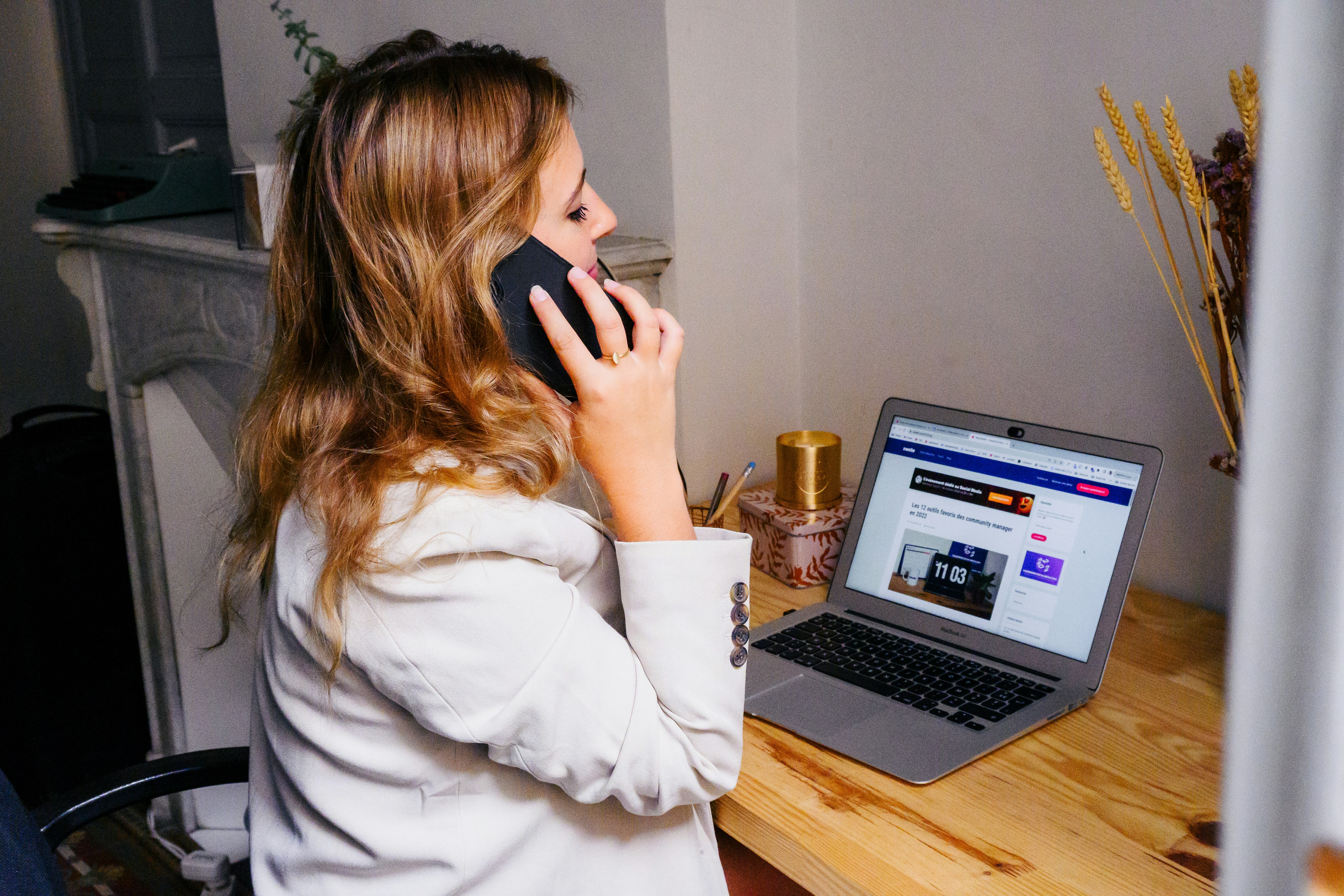
30 Days of Video Calls Only: What I Learned About the Power of Voice
For years, I’ve relied on phone calls for important conversations, brief catch-ups, and even light conversation. The simplicity, the seclusion, the freedom to move around my kitchen while conversing—all of these things felt so natural. Then, a thought struck me: what if I replaced all my phone calls with video calls for an entire month? No more disembodied voices; only faces, expressions, and the visual cues I often felt I was missing.
It is a more visually connected world, and I had no idea that this 30-day experiment would completely change the way I think about communication, exposing unforeseen difficulties and deep revelations about human connection.
The Origin of My Experiment
I didn’t suddenly come up with the idea. The distinction between personal and professional communication has become more blurred in recent years as video conferencing platforms have become as commonplace as email. I noticed I was using video more and more for cross-continental family catch-ups, virtual social events, and business meetings.
There were two main drivers behind my curiosity. First, I believed that seeing someone’s face would foster deeper empathy and understanding, removing the ambiguity that sometimes creeps into audio-only conversations. Second, the mental shift necessary to be “on camera” all the time, even for the most routine conversations, piqued my interest. Would I become more self-conscious, or more present, as a result?
Establishing Guidelines
To keep things fair and clear, I set one rule: every conversation that would normally be a phone call would instead be started as a video call for thirty days straight. This applied to personal calls with friends and family, professional calls with colleagues (when a dedicated meeting platform wasn’t already specified), and even customer service calls where a video option was available (though these were rare). Emails and texts were exempt, since they serve a different function.
I also kept a daily journal of my experiences, recording my emotional state, the nature of the conversations, and any technical difficulties.
The Novelty of the First Few Days
The first few days of my video-call-only experiment were unexpectedly thrilling.
| Metric | Result |
|---|---|
| Number of video calls made | 45 |
| Number of phone calls avoided | 20 |
| Time saved by using video calls | 2 hours |
| Overall satisfaction with video calls | High |
Seeing the faces of loved ones, colleagues, and even new acquaintances brought an immediate sense of connection that I hadn’t fully appreciated with traditional phone calls. I soon discovered how much I had been missing in nonverbal communication—a raised eyebrow, a knowing smile, a look of concern conveyed things a voice alone couldn’t. This was especially true in delicate discussions where feelings were running high. It felt more human.
Overcoming initial awkwardness: Not everyone adjusted immediately. At first, some friends found it a little uncomfortable, particularly for brief, impromptu calls. One common question was, “Do I have to look presentable?” I assured them that being casual was fine and that my intention wasn’t a photo shoot but a real connection. Most people warmed up quickly once we got talking. The initial obstacle was manageable, and the reward felt worthwhile.
The Unexpected Obstacles: Performance and Fatigue
As the days went on, real challenges emerged.
The stress of continuous performance. Perhaps the most important discovery was this: I was completely exhausted after making numerous video calls in a single day. Being continuously “on”—keeping eye contact, staying conscious of my background, even monitoring my own facial expressions—took more out of me than the conversations themselves.
A 2020–2021 study published in Human Communication & Technology found that replacing phone calls with video chats actually made many people feel more stressed and lonely during the pandemic, in sharp contrast to voice calls, which were linked to less stress. That finding made sense to me. Constant self-monitoring was draining. Experts at Korn Ferry have also pointed out that this focus on one’s “self-image,” combined with the lack of peripheral vision, can decrease psychological safety—something that resonated strongly with my own experience.
The multitasking dilemma and loss of freedom. One of the things I value most about phone calls is the freedom they provide. I can stroll around, wash dishes, water plants, or just talk while looking out the window. Video calls demand exclusive attention: I had to sit down, position myself properly, and give the screen my full focus. It felt more like “work” than a natural conversation. I missed the incidental, physical freedom of a phone call—for instance, I used to call my mother while unpacking groceries; now it required a fixed seat and a fixed gaze.
“Zoom fatigue” is real. It became clear how much less cognitive strain an audio-only call required. Even a brief phone call to a friend could be therapeutic, while the mental effort of even the most informal video chat felt heavier by comparison. Recent research suggesting that one phone call can be more restorative than ten video calls is hard to ignore. My brain, processing both visual and auditory cues simultaneously, felt overstimulated much of the time.
Technical glitches and connectivity woes. The practicalities of video-only communication were a continual source of annoyance on top of the psychological toll. The strain of constant video calls occasionally caused my normally dependable internet connection to falter. Nothing is more jarring than a conversation halting mid-sentence or losing an important point to a dropped connection. “Can you hear me? You’re frozen!” became a regular part of my vocabulary. Phone calls can drop too, but the visual interruption of video made these moments feel more startling and more of a barrier to real connection.
The weight of device requirements and bandwidth. Not everyone I called had reliable, high-speed internet. Some friends and relatives had to hunt for a stronger Wi-Fi signal or work around outdated devices that weren’t video-optimized. What should have been a simple call sometimes turned into a troubleshooting exercise. The simplicity of a voice call—requiring minimal bandwidth and a basic phone—suddenly felt like a lost luxury.
Startling Findings and Changing Views
As I worked through these obstacles, some unexpected realizations reshaped my perspective on communication.
The power of psychological safety. One of the most profound discoveries was the unexpected psychological safety that phone calls provide. Without continuous visual feedback, I felt more at ease being open, brainstorming, or just thinking out loud, without worrying about how my facial expressions were being read. This lines up with the idea that video conferencing—by forcing a focus on self-image and limiting peripheral vision—reduces that same psychological safety, making it mentally draining. It also helped explain why teams like Gumroad reportedly switched some internal meetings back to audio-only, finding video “largely unnecessary” for many discussions.
Voice calls, unexpectedly embraced by Gen Z. I also came across research showing that, despite the popularity of video, younger people are increasingly choosing to talk on the phone. Data from social platforms like Snapchat suggested that a generation often assumed to be hyper-visual was maintaining—and even reviving—its audio habits. That challenged my own assumptions about generational communication preferences and disproved my initial belief that video was the unquestionable future of all communication.
The Future: Intentionality and Hybrid Methods
By the end of my 30 days, I concluded that neither phone calls nor video calls are inherently superior—what matters is the intentionality behind their use.
Video works well for deep, empathetic connections where visual cues matter, such as catching up with a distant family member or having an important emotional conversation. But the simple phone call is still the better option for brief updates, informal chats, brainstorming sessions, or any call where multitasking is helpful. Businesses, too, are increasingly being advised to be deliberate about when to use each tool—a lesson I learned personally, after initially rushing to replace phone calls with video during the pandemic. Strategic integration, not exclusive use of one tool, is the way forward.
A Balanced Return
As my 30-day experiment ended, I felt a mix of relief and insight. I was enlightened by what the experience had taught me, but also relieved to be free of the constant pressure of being on camera for every interaction.
I’d started with the belief that more visual communication would automatically lead to deeper connection. In some instances, it did—but it also came with real costs: mental fatigue, reduced psychological safety, and a surprising loss of freedom. There was a restorative power to voice alone that I had taken for granted—the ability to connect without the extra layer of visual performance, to actually listen without constantly monitoring my surroundings or my own image.
Cutting-edge technology like Google’s Project Starline, which aims for “lifelike” video calls, points to an exciting future—but it also quietly acknowledges that standard video still lacks the convenience and informal ease of a phone call. Often, less is more when it comes to authentic, natural communication.
I now approach communication in a more nuanced way. I still make plenty of video calls, particularly when I want to see someone’s face or for professional meetings where visual collaboration matters. But video is no longer my default. The phone call has reclaimed its rightful place for informal conversations, quick questions, or moments when I just need to think out loud without feeling pressured to be “on.”
I’ve learned that living a truly connected life means deliberately choosing the tool that best serves the purpose—not defaulting to the newest technology for every interaction. During my month of video-only communication, I rediscovered the timeless power of the human voice, and the often-overlooked value of simplicity.
Leave a Reply