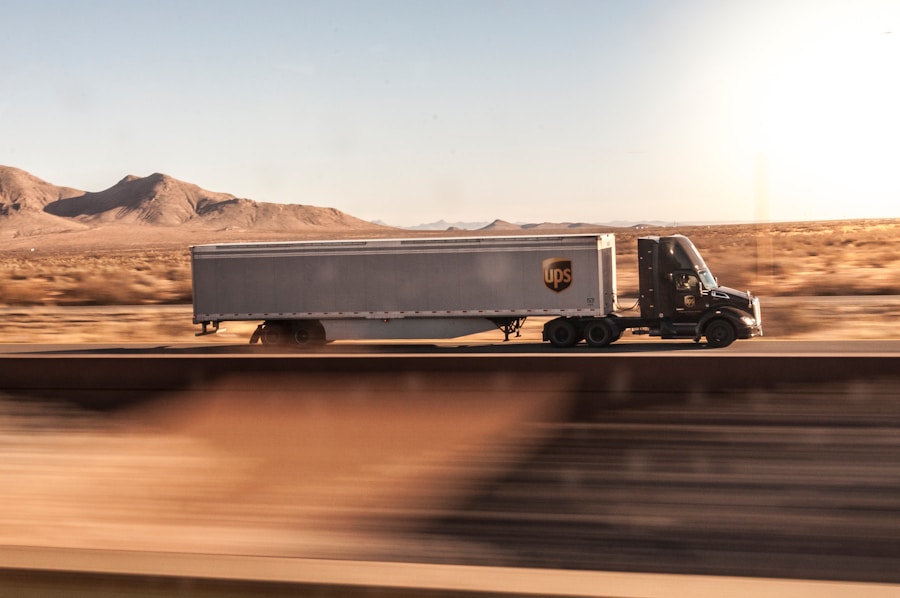
The parcels arrive in a satisfying rhythm, a testament to a vast, intricate dance that spans continents and connects individuals. I’ve often found myself staring at the UPS truck, a familiar brown beacon, and wondering about the sheer scale of the operation. It’s more than just delivering a box; it’s a complex organism, a carefully orchestrated symphony of logistics. Today, I want to pull back the curtain, to understand the magic that happens from the moment an order is placed to the point it lands on my doorstep.
What UPS Does: Package Delivery and Logistics Services
It’s easy to take for granted, isn’t it? The seamless arrival of goods, whether it’s a new gadget I’ve been eyeing or a care package from a loved one. But at its core, UPS, like many other major shipping companies, is designed to solve a fundamental problem: moving things from point A to point B efficiently and reliably. The basic function is deceptively simple – to transport packages. However, the underlying complexity is what truly fascinates me.
The Core Function: More Than Just Movement
At its most fundamental level, UPS’s job is to create a bridge between sellers and buyers, whether they are individuals, small businesses, or massive corporations. They provide the infrastructure, the vehicles, the technology, and the human power to consolidate, sort, and deliver millions of packages daily. This seemingly straightforward act involves a sophisticated network. Think about it: a package originating across the country, or even across an ocean, must be tracked, routed, and handled with precision to ensure it reaches its intended destination on time and in good condition.
The Importance of Reliability and Speed
In today’s fast-paced world, reliability and speed are paramount. The growth of e-commerce has amplified this need exponentially. Consumers expect their purchases to arrive quickly, and businesses rely on timely deliveries to maintain their operations and customer satisfaction. This is where UPS truly shines, having built its reputation on its ability to consistently meet these demands. The promise of a package’s arrival becomes a tangible certainty, a quiet assurance that underpins much of our commercial activity.
The Promise of Connectivity
Beyond mere delivery, UPS fosters connectivity. It allows businesses to reach customers far beyond their immediate geographical vicinity, opening up global markets. It enables families to stay connected through gifts and essentials, bridging distances with tangible tokens of affection. This role as a facilitator of connection, both commercial and personal, is crucial in our increasingly interconnected world. It’s the unseen hand that makes global commerce and personal relationships across distances possible.
How UPS Package Delivery Operations Work
The sheer volume of packages that UPS handles daily is staggering. To manage this, they employ incredibly sophisticated systems and processes. It’s not just about trucks and planes; it’s about data, technology, and human ingenuity working in tandem. Understanding these inner workings reveals the true complexity and brilliance of their operational model.
The Journey of a Package: From Origin to Destination
Let’s follow a hypothetical package. It’s picked up, either directly from a business or from a drop-off point. This initial scan is crucial. It enters UPS’s vast network, where it’ll be transported to a sortation hub. These hubs are colossal facilities, buzzing with activity, where packages are rapidly sorted based on their final destination. Think of it as a highly advanced, automated postal service, but on an industrial scale.
The Role of Technology and Automation
Technology is the lifeblood of UPS. From sophisticated tracking systems that allow me to monitor my package’s progress in real-time to the automated sortation machines that efficiently direct thousands of packages per hour, innovation is key. Their investment in robotics, AI-powered routing, and advanced scanning technology ensures accuracy and speed. This technological backbone is what allows them to handle such immense volumes without faltering. It’s a testament to how data and automation can streamline even the most physically demanding tasks.
The Human Element: The Unsung Heroes
While technology plays a vital role, it’s impossible to overlook the thousands of individuals who make UPS run. The drivers who navigate complex routes, the sorters who work tirelessly, the customer service representatives who answer our questions – they are the human gears in this massive machine. Their dedication and hard work are essential to the entire operation. I’ve always felt a sense of appreciation for the UPS driver who braves all sorts of weather to make their deliveries, a vital component of this intricate system.
The Architect of Flow: UPS and Its Role in Supply Chain Management
In the grand tapestry of modern business, supply chain management is the art of ensuring that goods flow smoothly from raw materials to the end consumer. UPS is not merely a courier; it’s a fundamental pillar of this complex ecosystem, offering services that go far beyond simple package delivery.
Facilitating Business-to-Business (B2B) Deliveries
For businesses, the efficiency of their supply chain can make or break them. UPS provides crucial B2B logistics solutions, enabling businesses to move inventory between facilities, distribute products to retailers, and manage returns effectively.
This allows companies to focus on their core competencies, trusting UPS to handle the complex, time-sensitive movement of their goods. It’s about enabling commerce at a foundational level, ensuring that manufacturing and retail can operate in sync.
Inventory Management and Fulfillment Support
Beyond just transportation, UPS offers services that integrate with inventory management and order fulfillment. This means they can not only transport products but also help businesses store them, pick and pack orders, and even handle the complexities of international shipping.
This holistic approach provides businesses with end-to-end solutions, simplifying their operations and reducing logistical headaches. It’s about taking the burden of physical distribution off the shoulders of businesses.
The Strategic Advantage of Outsourcing Logistics
Many companies choose to outsource their logistics to specialists like UPS because it offers a strategic advantage. Instead of investing heavily in their own fleets, warehouses, and tracking technology, they can leverage UPS’s existing infrastructure and expertise.
This can lead to significant cost savings, improved efficiency, and the ability to scale operations up or down as needed. It’s a smart business decision that allows companies to remain competitive in a global market.
The Digital Revolution’s Delivery Partner: UPS and the E-commerce Boom
The rise of e-commerce has been nothing short of revolutionary, and at the heart of this transformation lies the logistical prowess of companies like UPS. They are the silent enablers, the ones who turn a few clicks on a website into a tangible delivery at my doorstep.
The Foundation of Online Shopping
Without reliable and efficient shipping, e-commerce simply wouldn’t exist in its current form. UPS, with its vast network and commitment to timely deliveries, forms the bedrock upon which online retail is built. When I click “buy now,” I’m implicitly relying on UPS to make that transaction a reality, to bridge the gap between the digital storefront and my physical location.
Last-Mile Delivery: The Critical Connection
The “last mile” – the final leg of a package’s journey from a local distribution center to the customer’s home – is notoriously the most complex and expensive part of the delivery process. UPS has invested heavily in optimizing this crucial step, employing sophisticated routing software, diverse delivery vehicles, and strategically located facilities to ensure packages reach consumers swiftly and cost-effectively. This intricate dance of the last mile is what makes impulse online purchases feasible.
Supporting Small Businesses and Entrepreneurs
The e-commerce revolution has also democratized entrepreneurship. UPS plays a vital role in supporting small businesses and individual entrepreneurs by providing them with the logistical capabilities to reach a global customer base. Affordable shipping options, easy-to-use online tools, and reliable delivery services empower these businesses to compete with larger players, fostering innovation and economic growth. It’s empowering the little guys to become global players.
A Greener Path Forward: UPS’s Environmental Impact and Sustainability Efforts

As awareness of our planet’s well-being grows, so too does the scrutiny of large corporations’ environmental footprint. I’ve noticed the increasing emphasis UPS places on sustainability, and it’s reassuring to see a major player taking significant steps towards a greener future.
Reducing Emissions: A Fleet in Transition
The sheer scale of UPS’s delivery fleet means that emissions are a significant concern. However, they are actively addressing this through a multi-pronged approach. This includes investing in electric and alternative-fuel vehicles, optimizing delivery routes to reduce mileage, and implementing fuel-efficient driving practices. It’s a conscious effort to green their immense fleet, one delivery at a time.
Sustainable Packaging Initiatives
The packaging surrounding our purchases also contributes to environmental impact. UPS is encouraging and facilitating the use of more sustainable packaging materials, promoting lightweighting to reduce fuel consumption during transport, and supporting initiatives for responsible disposal and recycling. This partnership in the packaging process is crucial for a truly circular economy.
Community and Conservation Efforts
Beyond operational changes, UPS is also involved in various community and conservation initiatives. This can include tree-planting programs, support for renewable energy projects, and efforts to reduce waste in their facilities. These actions demonstrate a commitment to environmental stewardship that extends beyond their immediate business operations, contributing to broader ecological well-being.
Bridging Continents: UPS and Global Trade Facilitation
The world is more interconnected than ever, and international shipping is the engine that powers this global exchange. UPS plays an indispensable role in facilitating this, navigating the complexities of customs, regulations, and vast distances to connect businesses and consumers across borders.
Navigating International Customs and Regulations
Shipping internationally is a daunting prospect for many. UPS acts as a crucial intermediary, possessing the expertise and infrastructure to manage complex customs procedures, tariffs, and regulatory requirements. Their understanding of different countries’ import and export laws simplifies the process for businesses, making international trade more accessible and less of a barrier.
Building a Global Network for Seamless Delivery
To facilitate global trade, UPS has painstakingly built an extensive international network of hubs, aircraft, and ground transportation. This allows for the efficient movement of goods across continents, ensuring that packages can be collected, sorted, and delivered to destinations worldwide. It’s a monumental feat of coordination and infrastructure development.
The Economic Impact of Global Logistics
The ability to conduct international trade reliably and efficiently has a profound economic impact. UPS, by making global logistics more accessible, empowers businesses to reach new markets, source materials globally, and grow their operations. This, in turn, fuels economic development and creates jobs on an international scale. It’s about fostering prosperity through interconnectedness.
The Horizon of Delivery: Innovations and the Future of UPS
The world of logistics is not static. It’s a field constantly being reshaped by technological advancements and evolving consumer expectations. I’m always excited to think about what’s next for UPS, about the innovations that will further refine and revolutionize package delivery.
The Rise of Autonomous Delivery and Drones
The concept of autonomous vehicles and delivery drones is no longer science fiction; it’s rapidly becoming a reality. UPS is actively exploring and piloting these technologies, which have the potential to significantly increase delivery speed and efficiency, particularly in certain types of environments. Imagine a future where a drone is the final link in the chain, bringing your package directly to your window.
The Role of AI and Big Data in Optimization
Artificial intelligence and big data analytics are already playing a crucial role in optimizing UPS’s operations, from route planning to predictive maintenance of their fleet. I anticipate these technologies will become even more sophisticated, leading to even greater efficiency, reduced costs, and a more personalized delivery experience for the customer. The sheer volume of data they can process offers incredible potential for continuous improvement.
Enhancing Customer Experience and Diversifying Services
Looking ahead, UPS will likely continue to focus on enhancing the customer experience, offering more flexible delivery options, and expanding its range of services even further. This could include anything from specialized delivery for sensitive items to more integrated solutions for businesses managing complex supply chains. My anticipation is for an even more seamless and integrated delivery ecosystem.
FAQs
What is UPS and why is it essential?
UPS, or United Parcel Service, is a global package delivery and supply chain management company. It is essential because it plays a critical role in facilitating the movement of goods and packages, supporting businesses and consumers in their shipping needs.
How does UPS work and what are its key functions?
UPS operates a vast network of transportation, distribution, and logistics facilities to pick up, transport, and deliver packages. Its key functions include package delivery, freight transportation, logistics, and supply chain management services.
What is the role of UPS in supply chain management and e-commerce?
UPS plays a crucial role in supply chain management by providing services such as inventory management, warehousing, and distribution. In e-commerce, UPS supports the growth of online retail by offering shipping solutions and last-mile delivery services.
What sustainability efforts and initiatives does UPS have in place?
UPS has implemented sustainability efforts such as alternative fuel vehicles, renewable energy projects, and eco-friendly packaging solutions to reduce its environmental impact. It also aims to achieve carbon neutral operations by 2050.
What innovations and advancements is UPS pursuing in package delivery technology?
UPS is investing in innovations such as drone delivery, autonomous vehicles, and advanced analytics to enhance its package delivery technology. These advancements aim to improve efficiency, speed, and customer experience in package delivery.
Leave a Reply