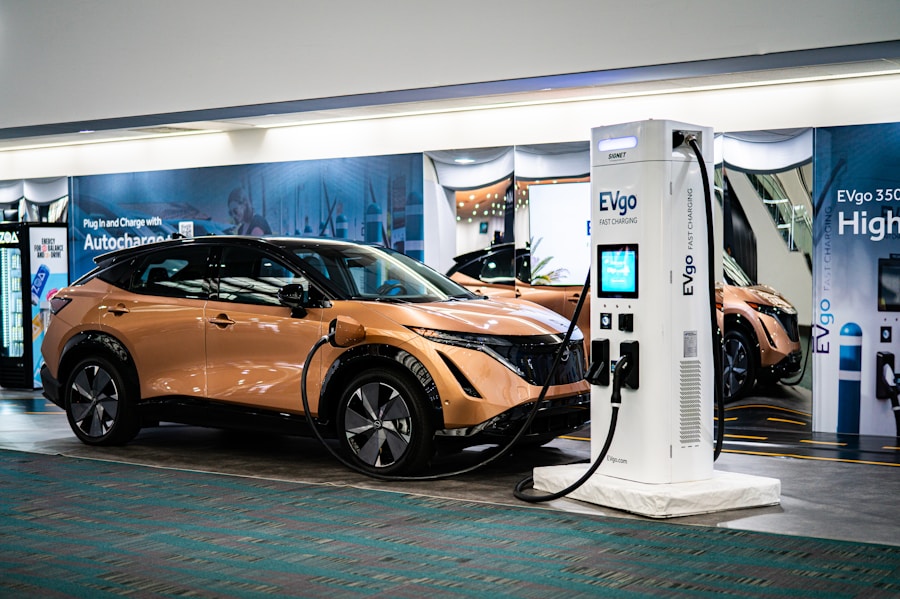
Performance and Range: Navigating the Electric Frontier
When choosing an EV for rental, performance and range are often the twin pillars of decision-making. These aren’t just figures on a spec sheet; they dictate the freedom and practicality of your journey. Let’s delve into how the MX-30 and bZ4X measure up.
Mazda MX-30: The City Slicker with a Short Leash
The Mazda MX-30 presents itself as an urban-centric EV, a spirited compact SUV designed for daily commutes and shorter excursions. Its primary characteristic, and often its most significant consideration for renters, is its relatively modest battery capacity.
- Battery Capacity and Range: The MX-30 is equipped with a 35.5 kWh lithium-ion battery. This translates to an EPA-estimated range of approximately 100 miles (161 kilometers). For city driving with readily available charging infrastructure, this might suffice. However, for those planning inter-city travel or without guaranteed charging access, this range can feel restrictive. It’s akin to having a well-designed, comfortable shoe that only fits one particular terrain – perfectly fine for a short stroll in the park, but less ideal for a mountain hike.
- Powertrain and Acceleration: A single electric motor drives the front wheels, producing 143 horsepower (107 kW) and 200 lb-ft (271 Nm) of torque. This provides adequate acceleration for urban environments, allowing the MX-30 to feel responsive when navigating traffic. 0 to 60 mph (0 to 97 km/h) typically takes around 9 seconds. While not a performance EV by any stretch, it offers a confident and smooth driving experience characteristic of Mazda.
- Driving Dynamics: Mazda prioritizes driving engagement, and the MX-30, despite its electric powertrain, largely adheres to this philosophy. It exhibits composed handling, precise steering, and a comfortable ride quality, especially at city speeds. The suspension effectively absorbs minor road imperfections, contributing to a pleasant ride.
Toyota bZ4X: The Longer-Legged Explorer
The Toyota bZ4X, in contrast, positions itself as a more conventional electric SUV with a stronger emphasis on range and versatility. It aims to offer a familiar SUV experience, albeit with an electric powertrain.
- Battery Capacity and Range: The bZ4X comes with a larger 71.4 kWh (FWD) or 72.8 kWh (AWD) battery pack. This significantly boosts its range compared to the MX-30. EPA estimates vary, but generally fall between 222 miles (357 km) for the FWD model and 204 miles (328 km) for the AWD variant. This extended range provides a much wider canvas for your rental adventures, making longer trips more feasible without frequent charging stops. It’s like having a backpack with ample space for essentials, rather than just a small fanny pack – more utility, more freedom.
- Powertrain and Acceleration: The FWD version features a single electric motor producing 201 horsepower (150 kW) and 196 lb-ft (265 Nm) of torque. The AWD variant uses dual motors (one per axle) for a combined output of 214 horsepower (160 kW) and 248 lb-ft (336 Nm) of torque. This translates to quicker acceleration than the MX-30, with 0 to 60 mph times hovering around 6.5 to 7.5 seconds, depending on the drivetrain. It offers a more robust feeling, particularly when merging onto highways.
- Driving Dynamics: As a newer platform designed from the ground up as an EV, the bZ4X offers a generally smooth and stable ride. While not as overtly “sporty” as some Mazda models, its handling is predictable and competent. The steering is light but accurate, making it easy to maneuver in urban environments. The AWD option adds an extra layer of traction and confidence, especially in inclement weather.
Interior and Comfort: Your Temporary Home on Wheels
Beyond performance, the interior experience is paramount, especially for a rental car that might serve as your primary mode of transport for days or weeks. How do these EVs fare in creating a comfortable and functional cabin?
Mazda MX-30: Style and Quirks in a Compact Shell
The MX-30’s interior design is undeniably distinct, reflecting Mazda’s commitment to aesthetic appeal and unique touches.
- Design and Materials: The cabin boasts a modern and minimalist aesthetic with a focus on sustainable materials. Cork accents, particularly on the center console, are a notable and unique design element, referencing Mazda’s origins as a cork manufacturer. The overall material quality is good for its segment, with soft-touch plastics and well-stitched upholstery.
- Seating and Space: The front seats are comfortable and supportive, providing a good driving position. However, the rear seats are a different story. Access is facilitated by “freestyle doors” (Mazda’s term for suicide doors), which open opposite each other, similar to the BMW i3. While visually interesting, these doors can be cumbersome in tight parking spaces. Once inside, rear passenger legroom and headroom are notably limited, making it less suitable for carrying adult passengers on longer journeys. It’s a compelling design choice, but one that undeniably trades practicality for stylistic flair. Children and smaller adults might find it acceptable, but taller individuals will likely feel constrained.
- Infotainment and Features: The MX-30 features an 8.8-inch infotainment display controlled by Mazda’s Commander control knob, along with a separate 7-inch digital display for climate control. Apple CarPlay and Android Auto are standard. The system is intuitive to use once you acclimate to the control knob, and the physical buttons for common functions are appreciated.
Toyota bZ4X: Spaciousness with a Digital Edge
The bZ4X’s interior prioritizes practicality and modern technology, offering a more traditional SUV feel in terms of space.
- Design and Materials: The bZ4X’s interior adopts a contemporary, somewhat futuristic design. A notable feature is the low-set digital instrument cluster positioned above the steering wheel, requiring a specific seating position to view clearly. Material quality is decent, with a mix of soft plastics and textured surfaces, though some areas might feel a bit utilitarian. Piano black finishes are present, which are prone to fingerprints.
- Seating and Space: Both front and rear passengers enjoy ample legroom and headroom. The bZ4X genuinely feels like a comfortable five-seater SUV, making it a much more versatile option for families or groups compared to the MX-30. The flat floor, courtesy of the EV platform, enhances the sense of spaciousness. Entry and exit are straightforward through conventional doors. This is a significant advantage for rentals where passenger comfort across multiple occupants is a priority.
- Infotainment and Features: A large 12.3-inch touchscreen infotainment system dominates the center console, offering wireless Apple CarPlay and Android Auto. The interface is generally responsive and intuitive. A 7-inch digital gauge cluster is standard. Toyota’s latest infotainment system is a considerable upgrade over previous generations, providing a more modern and connected experience.
Charging and Infrastructure: The Electric Lifeline
For any EV rental, understanding the charging landscape is crucial. How quickly can these vehicles replenish their electrons, and what kind of charging options do they support?
Mazda MX-30: Moderation in Charging Speed
Given its smaller battery, the MX-30 is designed for less intensive charging cycles.
- AC Charging (Level 2): The MX-30 supports Level 2 AC charging (240V) at up to 6.6 kW. This means a full charge from empty can take approximately 5-6 hours. This is suitable for overnight charging at a home or workplace charger.
- DC Fast Charging (Level 3): For quick top-ups, the MX-30 can utilize DC fast charging via a CCS connector, with a peak charging rate of around 50 kW. This allows for a 20% to 80% charge in roughly 36 minutes. While not the fastest, its smaller battery means less charging time is ultimately required to reach full capacity. It’s like filling a small watering can versus a large bucket – the latter takes longer, even with a strong flow.
- Charging Port: Uses the CCS (Combined Charging System) standard in North America and Europe.
Toyota bZ4X: Faster and More Flexible Charging
The bZ4X, with its larger battery, caters to more demanding charging scenarios and offers faster charging capabilities.
- AC Charging (Level 2): The bZ4X supports Level 2 AC charging at up to 6.6 kW (FWD) or 11 kW (AWD). With the 11 kW onboard charger, an AWD model can fully charge from empty in about 6.5 hours. The FWD model would take closer to 11 hours. Therefore, for faster Level 2 charging, the AWD variant has an edge.
- DC Fast Charging (Level 3): This is where the bZ4X shows a more significant advantage. The FWD model can achieve peak DC fast charging speeds of up to 150 kW, while the AWD model peaks at 100 kW. A 20% to 80% charge can be completed in approximately 30-60 minutes, depending on the charger and variant. However, it’s worth noting some reports of slower charging speeds in cold weather or after multiple rapid charge cycles, an issue addressed by Toyota with software updates. It’s a sophisticated machine, but even sophisticated machines have their quirks, especially in nascent technologies.
- Charging Port: Also uses the CCS (Combined Charging System) standard in North America and Europe.
Cargo and Practicality: Beyond the Passenger Cabin
For renters looking for more than just a joyride, cargo capacity and overall practicality are essential considerations. How much luggage can you really fit, and how adaptable are these EVs to various scenarios?
Mazda MX-30: Form Over Ounces
The MX-30’s compact dimensions naturally limit its cargo-carrying prowess.
- Trunk Volume: The trunk offers approximately 14.5 cubic feet (410 liters) of storage space with the rear seats up. This is comparable to an average compact hatchback. It’s sufficient for a few carry-on bags or a weekly grocery run, but larger items or extensive travel luggage will likely be a challenge.
- Rear Seat Folding: The rear seats can fold down in a 60/40 split, expanding the cargo area. However, the resulting load floor is not entirely flat, and the “freestyle doors” don’t necessarily simplify loading larger items. The priority here is clearly aesthetics and driving experience, not maximum utility.
Toyota bZ4X: A More Traditional SUV Approach
The bZ4X embraces the utility expected of an SUV, offering more conventional and generous cargo space.
- Trunk Volume: The bZ4X provides a more substantial cargo area, roughly 27.7 cubic feet (784 liters) with the rear seats in place (depending on trim and whether it has a spare tire). This is significantly more than the MX-30 and aligns with typical compact SUVs. It can comfortably accommodate several large suitcases or a substantial amount of groceries, making it a better choice for family trips or those with significant gear.
- Rear Seat Folding: The rear seats fold in a 60/40 split to create a considerably larger, relatively flat cargo area. This enhances its versatility for carrying bulkier items, resembling the practicality offered by traditional gasoline-powered compact SUVs.
Driving Experience and Technology: The Human-Machine Interface
table{width:100%;border-collapse:collapse;border:2px solid #f2f2f2}tr{display:table-row;vertical-align:inherit;border-color:inherit;line-height:40px}th,td{padding:12px;text-align:left;border-bottom:1px solid #e5e7eb;line-height:40px}
| Aspect | Mazda MX-30 | Toyota bZ4X |
|---|---|---|
| Range (miles) | 100 | 250 |
| Battery Capacity (kWh) | 35.5 | 71.4 |
| Charging Time (hours) | 4 | 8 |
| Price (USD) | 33,470 | 40,000 |
Finally, let’s consider the subjective yet critical aspects of how these vehicles feel to drive and how their integrated technologies enhance or detract from the rental experience.
Mazda MX-30: Engaging and Refined
Mazda has a reputation for building driver-focused vehicles, and the MX-30 largely maintains this, albeit with an electric twist.
- Driving Feel: The MX-30 offers a surprisingly engaging driving experience for an EV. The steering is precise and well-weighted, providing good feedback. The suspension tuning strikes a commendable balance between comfort and handling, making it feel nimble and composed, particularly on winding urban roads. The regenerative braking can be adjusted via paddle shifters, allowing the driver to control the deceleration force, a feature often appreciated by EV enthusiasts. It feels like a well-tailored suit that might be a bit snug, but perfectly designed for certain movements.
- Safety Features: Standard safety features include adaptive cruise control with stop-and-go, lane-keeping assist, blind-spot monitoring, rear cross-traffic alert, and automatic emergency braking. Mazda’s i-Activsense suite is generally comprehensive and unobtrusive.
- Unique Features: The aforementioned “freestyle doors” are undoubtedly a conversation starter. The cork accents and unique floating center console also contribute to a distinctive cabin ambiance.
Toyota bZ4X: Smooth, Quiet, and Tech-Forward
The bZ4X aims for a comfortable and effortless driving experience, emphasizing quietness and modern technological integration.
- Driving Feel: The bZ4X prioritizes a smooth and quiet ride, characteristic of many EVs. Acceleration is brisk, especially in the AWD variant. While it handles competently, it doesn’t offer the same level of driver engagement as the MX-30; the steering is lighter, and the suspension leans more towards comfort than sporty dynamics. The “one-pedal driving” mode, which maximizes regenerative braking for a more intuitive EV driving style, is available and works effectively. It’s more like a comfortable, reliable pair of running shoes – designed for efficiency and ease over long distances.
- Safety Features: Toyota’s comprehensive Safety Sense 3.0 suite is standard, including pre-collision system with pedestrian detection, lane departure alert with steering assist, automatic high beams, road sign assist, full-speed range dynamic radar cruise control, and lane tracing assist. These systems generally function effectively to enhance safety.
- Unique Features: The unique instrument cluster placement and optional radiant foot-and-leg warmer for front passengers (available on certain trims) are distinguishing features. The top-spec limited models also offer a panoramic glass roof, further enhancing the cabin’s ambiance.
Conclusion: Making Your Rental Choice
So, which hidden gem is the right fit for your next rental? The answer, as is often the case, lies in your specific needs and priorities.
The Mazda MX-30 is a stylish and engaging compact EV, perfectly suited for urban dwellers or those planning short-to-medium distance rentals. Its strengths lie in its distinctive design, nimble handling, and quality interior. However, its significant limitations in range and rear passenger space mean it’s primarily a choice for individuals or couples without substantial luggage, or those who are confident in their ability to access charging infrastructure frequently. Think of it as a finely crafted espresso – a small but potent and enjoyable experience, best savored in short bursts.
The Toyota bZ4X, on the other hand, is the more pragmatic and versatile choice. With its significantly greater range, spacious interior, and ample cargo capacity, it aligns much more closely with the typical expectations of a rental SUV. It’s a solid all-rounder that can comfortably handle longer journeys, family trips, or situations requiring more utility. While perhaps not as overtly “fun to drive” as the MX-30, it delivers a comfortable, quiet, and capable electric driving experience. It’s more akin to a hearty stew – less flamboyant, but consistently satisfying and provides lasting sustenance for your journey.
Before you book, consider your typical driving distances, the number of passengers you’ll carry, your luggage requirements, and your comfort level with charging infrastructure. Both vehicles offer a taste of the electric future but in distinctly different flavors. Uncovering the “hidden gem” is truly about discerning which EV’s characteristics best align with the blueprint of your temporary adventure. Happy renting!
FAQs
1. What are the key features of the Mazda MX-30 and Toyota bZ4X?
The Mazda MX-30 is an all-electric compact SUV with a unique freestyle door design and sustainable interior materials. The Toyota bZ4X is also an all-electric SUV with a spacious interior, advanced technology features, and a focus on sustainability.
2. How do the driving experiences of the Mazda MX-30 and Toyota bZ4X compare?
The Mazda MX-30 offers a smooth and agile driving experience with responsive handling, while the Toyota bZ4X provides a comfortable and quiet ride with strong acceleration and precise steering.
3. What are the differences in range and charging capabilities between the Mazda MX-30 and Toyota bZ4X?
The Mazda MX-30 has a smaller battery and offers a range of around 100 miles, while the Toyota bZ4X has a larger battery and a range of over 250 miles. The Toyota bZ4X also supports fast charging, allowing for quick recharging on the go.
4. How do the interior designs of the Mazda MX-30 and Toyota bZ4X differ?
The Mazda MX-30 features a modern and minimalist interior with sustainable materials such as cork and recycled fabrics, while the Toyota bZ4X offers a spacious and well-appointed cabin with high-quality materials and advanced infotainment options.
5. What are the pricing and availability of the Mazda MX-30 and Toyota bZ4X?
The Mazda MX-30 has a starting price of around $33,000 and is available in select markets, while the Toyota bZ4X is expected to have a starting price in a similar range and will be available for purchase in the near future.
Leave a Reply