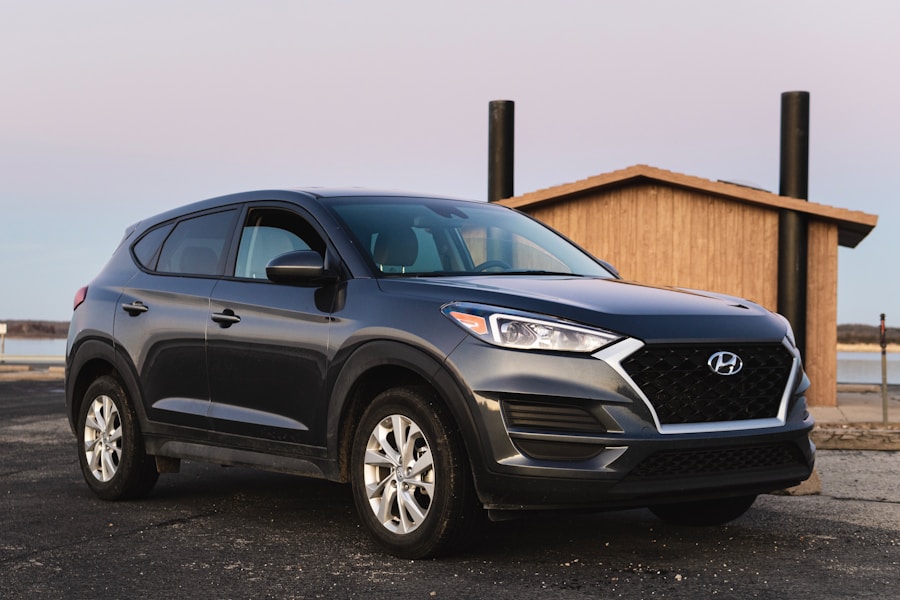
The Hyundai Tucson Hybrid presents a compelling option for those seeking a balance between fuel efficiency and practical utility. It manages to achieve this without the typical compromises often associated with hybrid vehicles, particularly in the realm of interior space. This article explores the Tucson Hybrid’s various facets, offering an in-depth look at its performance, technology, and practicality, and helping you determine if it aligns with your automotive needs.
Powering Your Journey: Performance and Efficiency
When considering a hybrid, your primary concern is likely fuel economy, and the Tucson Hybrid delivers commendably. However, it’s important to understand that efficiency here doesn’t come at the expense of a sluggish driving experience.
The Hybrid Powertrain Explained
The Tucson Hybrid utilizes a 1.6-liter turbocharged four-cylinder engine paired with an electric motor. This combination, orchestrated by a 6-speed automatic transmission, produces a total system output of 227 horsepower and 258 lb-ft of torque. This is a significant improvement over the standard gasoline-powered Tucson, offering a more responsive feel under acceleration. Think of it as having a second wind when you need it, the electric motor seamlessly providing that low-end torque boost. This integration ensures that the power delivery feels natural and not disjointed, a common concern with some early hybrid systems. The transition between electric and gasoline power is often imperceptible to the driver, a testament to Hyundai’s engineering.
Fuel Economy Figures: A Practical Look
The EPA estimated fuel economy for the front-wheel-drive Tucson Hybrid is typically around 38 miles per gallon combined (38 city/38 highway). All-wheel-drive variants see a slight reduction, often around 37 miles per gallon combined (37 city/36 highway). While these numbers might not break records compared to some dedicated hyper-efficient hybrids, they represent a substantial improvement over equivalent gasoline SUVs. For instance, if you’re upgrading from a traditional compact SUV, you’re looking at a noticeable reduction in your fuel bill, particularly during city driving where the electric motor can do more of the heavy lifting. Consider your daily commute: if it involves frequent stop-and-go traffic, the hybrid system truly shines, conserving fuel during those low-speed instances.
Driving Dynamics: Beyond the Numbers
Beyond the raw figures, the Tucson Hybrid offers a composed and comfortable driving experience. The ride quality is generally smooth, absorbing road imperfections without creating an overly soft or disconnected feel. Steering is light but provides enough feedback for confidence, making it easy to maneuver in urban environments. While it won’t win any drag races, the acceleration is more than adequate for merging onto highways and passing slower traffic. The added weight of the hybrid components is well-managed, and the vehicle feels stable at speed. This isn’t a sports car disguised as an SUV; it’s designed for comfortable, efficient daily driving, and it executes that brief admirably.
Thoughtful Interior Design: Space and Comfort
One of the Tucson Hybrid’s most compelling attributes is its ability to integrate hybrid technology without compromising the interior space that SUV buyers often prioritize. This is crucial; no one wants to sacrifice utility for efficiency.
Passenger Comfort Across Two Rows
The Tucson Hybrid boasts a surprisingly spacious cabin for a compact SUV. Both front and rear passengers will find ample headroom and legroom, even for taller individuals. The rear seats, in particular, offer generous space, making long journeys more comfortable for back-seat occupants. It’s a noticeable step above some competitors in this regard, feeling less like a constrained space and more like a proper family vehicle. Think of it as a well-designed living room, where every seat offers a good vantage point and personal space. The panoramic sunroof, available on higher trims, further enhances the feeling of airiness and openness within the cabin.
Cargo Capacity: Uncompromised Utility
A common apprehension with hybrids is the placement of the battery pack impacting cargo space. The Tucson Hybrid cleverly integrates its battery beneath the rear seats, meaning the cargo area remains largely unaffected. You’re looking at around 38.7 cubic feet of cargo space with the rear seats up, expanding to approximately 74.8 cubic feet with them folded flat. These figures are competitive within the compact SUV segment and are virtually identical to the gasoline-powered Tucson. This means you won’t need to choose between carrying groceries and carrying luggage for a weekend trip. The load floor is relatively flat when the seats are folded, simplifying the loading and unloading of bulkier items. This is a significant advantage for those who frequently transport gear, strollers, or even pets.
Material Quality and Ergonomics
The interior materials are generally of good quality, with a mix of soft-touch surfaces and durable plastics. While it may not exude luxury, it feels well-built and designed to withstand the wear and tear of family life. Ergonomics are well-thought-out, with primary controls logically placed and easy to reach. The physical buttons for climate control and essential functions are a welcome feature, avoiding the frustration of navigating through touchscreens for basic tasks while driving.
Technology and Infotainment: Staying Connected
In today’s automotive landscape, technology isn’t just a luxury; it’s an expectation. The Tucson Hybrid delivers a robust suite of tech features, enhancing both convenience and safety.
Infotainment System: User-Friendly Interface
The standard infotainment system features an 8-inch touchscreen, while higher trims receive a larger 10.25-inch unit. Both systems offer crisp graphics and quick response times. Apple CarPlay and Android Auto are standard, allowing seamless smartphone integration. The larger screen, in particular, provides a more immersive experience for navigation and media playback. The menu structures are intuitive, reducing the learning curve for new users. Hyundai has struck a good balance between digital sophistication and ease of use.
Driver-Assistance Features: A Shield of Safety
Hyundai equips the Tucson Hybrid with a comprehensive suite of driver-assistance technologies under its “Hyundai SmartSense” umbrella. This includes forward collision-avoidance assist with pedestrian detection, lane keeping assist, lane following assist, automatic high beams, and driver attention warning. Higher trims add features like blind-spot collision-avoidance assist, rear cross-traffic collision-avoidance assist, adaptive cruise control with stop-and-go, and highway driving assist. These systems act as an extra set of eyes and ears, working to mitigate potential accidents and reduce driver fatigue, especially on long journeys. They’re not a substitute for attentive driving, but they offer valuable layers of protection, like having a vigilant co-pilot always scanning the road with you.
Convenience Features: Enhancing the Daily Drive
Beyond the core tech, the Tucson Hybrid offers numerous convenience features that improve the overall ownership experience. These can include a digital key, allowing your smartphone to act as the car key, a hands-free power liftgate, heated and ventilated front seats, and a premium Bose sound system. These small touches collectively contribute to making your daily commute or longer trips more enjoyable and less stressful.
Trim Levels and Value Proposition: Finding Your Fit
The Tucson Hybrid is offered in several trim levels, each designed to cater to different budgets and preferences. Understanding these options is key to finding the model that best suits your needs.
SEL Convenience: The Sweet Spot
For many buyers, the SEL Convenience trim represents the best value. It builds upon the well-equipped base model by adding significant features such as a hands-free power liftgate, a panoramic sunroof, heated front seats, wireless charging, and the larger 10.25-inch digital gauge cluster. This trim offers a substantial upgrade in comfort and technology without venturing into the highest price points, delivering a strong feature-to-cost ratio. It’s like finding the perfect balance on a seesaw – giving you enough without going overboard.
Limited Trim: Premium Experience
The Limited trim is the pinnacle of the Tucson Hybrid lineup, offering a more luxurious experience. This includes leather seating surfaces, ventilated front seats, heated rear seats, a premium Bose audio system, a surround-view monitor, and a blind-spot view monitor. While carrying a higher price tag, the Limited trim provides a truly upscale ambiance and a full suite of advanced features. If your budget allows, and you prioritize creature comforts and cutting-edge tech, the Limited is designed to impress.
Value for Money: A Long-Term Perspective
When evaluating the Tucson Hybrid’s value, it’s important to consider not just the sticker price but also the long-term savings on fuel. While the hybrid variant typically costs a bit more upfront than its gasoline counterpart, the reduced fuel consumption can offset this difference over several years of ownership. Factor in Hyundai’s excellent warranty, including a 10-year/100,000-mile powertrain warranty and a 10-year/100,000-mile hybrid system warranty, and the ownership proposition becomes even more compelling. This essentially acts as a safety net, protecting your investment for an extended period.
Practicality and Ownership: Living with the Tucson Hybrid
Ultimately, a vehicle’s true measure lies in how it integrates into your daily life. The Tucson Hybrid aims to be a practical, no-nonsense companion for a wide range of activities.
Everyday Usability: A Seamless Companion
The Tucson Hybrid excels in its role as a versatile daily driver. Its compact dimensions make it maneuverable in tight city streets and parking lots, while the elevated driving position offers good visibility. The rear liftgate opens wide, and the low load floor simplifies grocery runs or loading children’s sports equipment. For families, the accessible LATCH anchors in the rear seats simplify child seat installation. It’s a vehicle designed to effortlessly blend into your routines rather than demand adjustments.
Reliability and Maintenance: Peace of Mind
Hyundai has a strong reputation for reliability, and their hybrid systems have proven to be robust. The comprehensive warranty provides a significant layer of assurance against unexpected repair costs. Routine maintenance for a hybrid is generally similar to a conventional vehicle, with the added benefit that the electric drivetrain components often experience less wear and tear. This means potentially longer brake pad life due to regenerative braking and less stress on the gasoline engine. Regenerative braking, in particular, is like having an invisible hand gently applying the brakes for you while simultaneously recharging the battery, extending the life of your conventional brake pads.
Who is the Tucson Hybrid For?
The Hyundai Tucson Hybrid is an excellent choice for individuals or families who desire the practicality and versatility of a compact SUV but prioritize fuel efficiency. It’s ideal for: commuters seeking to reduce fuel costs, families who need ample space for passengers and cargo, and those who appreciate modern technology and a comfortable, refined driving experience. If you’re looking for a vehicle that offers a pragmatic blend of efficiency, space, and modern features without making significant sacrifices, the Tucson Hybrid should be high on your consideration list. It’s truly a vehicle that seeks to offer the best of both worlds, and largely succeeds.
FAQs
1. What is the fuel efficiency of the Hyundai Tucson Hybrid?
The Hyundai Tucson Hybrid offers an impressive fuel efficiency, with an estimated 38 mpg combined for the front-wheel drive model and 37 mpg combined for the all-wheel drive model.
2. How much cargo space does the Hyundai Tucson Hybrid offer?
Despite being a hybrid, the Hyundai Tucson Hybrid maintains ample cargo space, with 38.7 cubic feet behind the rear seats and 74.8 cubic feet with the rear seats folded down.
3. What are the performance capabilities of the Hyundai Tucson Hybrid?
The Hyundai Tucson Hybrid is equipped with a 1.6-liter turbocharged four-cylinder engine paired with an electric motor, delivering a combined 226 horsepower and 258 lb-ft of torque.
4. What are some key features of the Hyundai Tucson Hybrid?
The Hyundai Tucson Hybrid comes with a range of features, including a 10.25-inch touchscreen infotainment system, wireless smartphone charging, Hyundai SmartSense safety suite, and a panoramic sunroof.
5. How does the Hyundai Tucson Hybrid compare to its non-hybrid counterpart?
Compared to the non-hybrid Tucson, the Tucson Hybrid offers improved fuel efficiency and lower emissions without compromising on interior space, making it an attractive option for eco-conscious drivers.
Leave a Reply